Ressort récupérateur : le remplacer avant qu'il ne vous lâche
C'est la pièce d'usure la plus négligée, et la cause n°1 des extractions faibles. Seuils réels par plateforme, symptômes et méthode de contrôle.
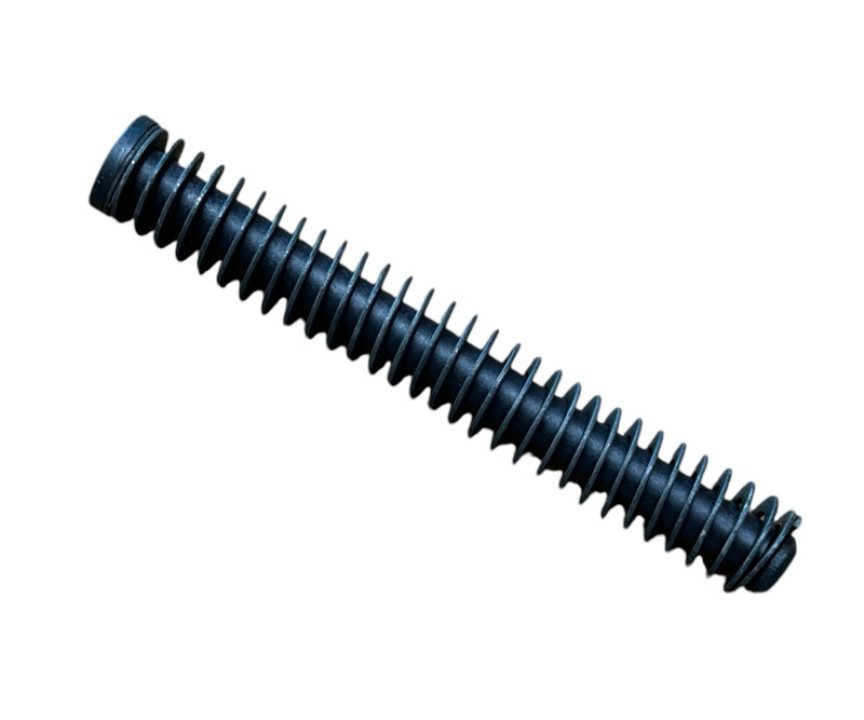
Les extractions molles en fin de séance, les étuis qui retombent sur la glissière, le retour en batterie paresseux à froid : trois symptômes, une seule cause dans la grande majorité des cas. Le ressort récupérateur est un consommable, pas une pièce à vie.
Les seuils réels, plateforme par plateforme
Les manuels sont optimistes. Les données de la communauté donnent des chiffres plus prudents : 4 000 coups sur un pistolet compétition en 9×19 (CZ Shadow 2, Prodigy), 5 000 sur un polymère de service (Glock, PDP), 3 000 en usage intensif avec munitions majorées. Notez le compteur à l'installation, c'est exactement ce qu'Armory automatise.
Contrôler sans démonter : la méthode simple
Comparez un ressort neuf et l'ancien côte à côte : au-delà de 5 % de perte de longueur libre, remplacez. Autre indice fiable : si les étuis tombent à moins d'un mètre alors qu'ils partaient à deux, la vélocité de glissière a chuté. Un ressort coûte 15 € ; un extracteur cassé par sur-régime, dix fois plus.
Le suivi qui évite la panne
Notez chaque remplacement dans le journal d'entretien de l'arme avec le compteur du jour. Au prochain passage au même kilométrage, vous saurez si votre rythme est le bon : trop tôt, vous jetez des ressorts sains ; trop tard, vous découvrez la fatigue en plein match. C'est exactement le rôle des seuils par pièce d'usure de votre fiche Armory.
Armory suit chaque coup, chaque entretien et chaque pièce d'usure. 100% gratuit.